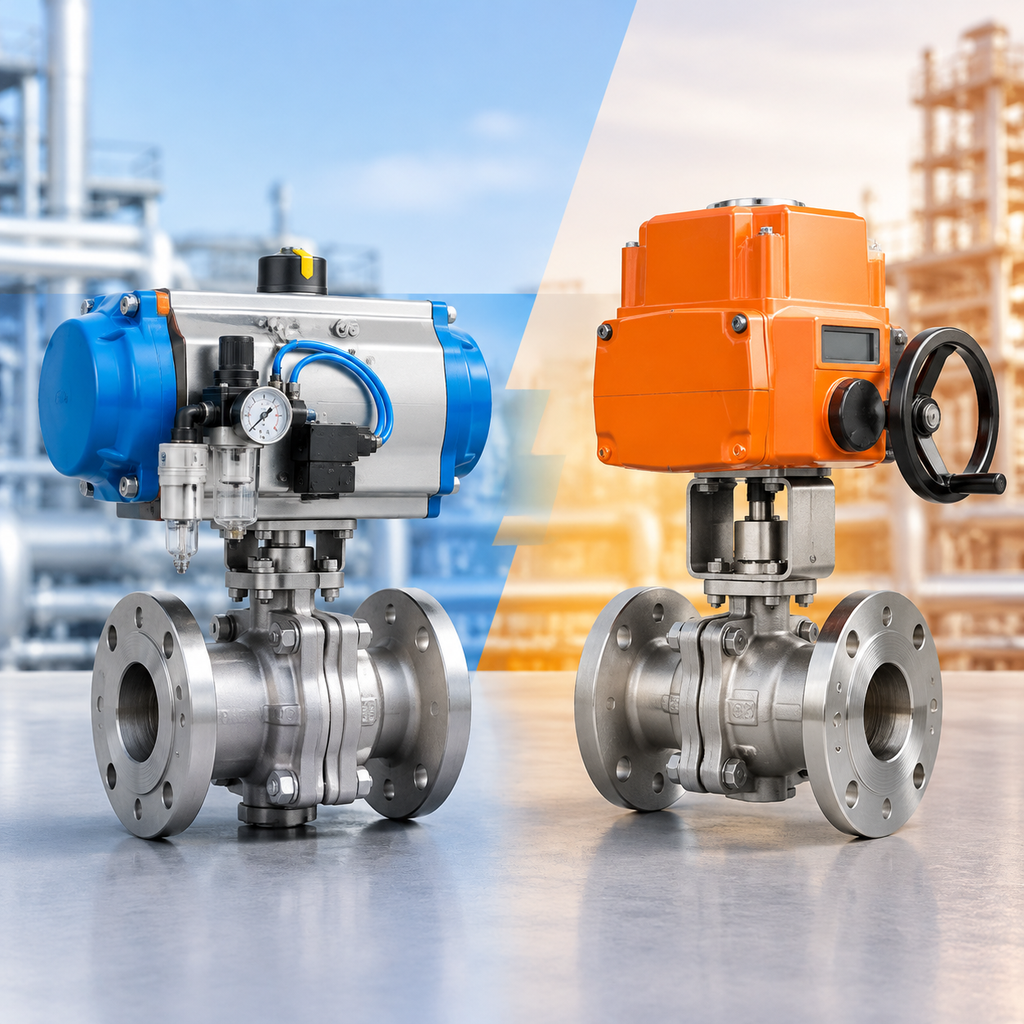
Pneumatic or Electric Actuation: A Project-Level Comparison for Valve Buyers
A project should compare pneumatic and electric valve actuation by matching the actuator to available utilities, required response, duty cycle, torque or thrust, control signals, feedback needs, environment, hazardous-area requirements, maintenance capability, and lifecycle constraints. This framework is useful for automation engineers, plant maintenance teams, and EPC procurement groups that need a defensible selection process beyond purchase price.
Shanghai Juliang Valve Group Co., Ltd. presents industrial valve products including pneumatic valves, electric valves, solenoid valves, control valves, angle-seat valves, manual valves, corrosion-resistant valves, and customized valve products on its public product page. That product scope makes actuator selection a practical procurement question, but exact model data, certifications, and application suitability still need documentary confirmation before use in a project specification.
How should a project compare pneumatic and electric valve actuation?
A project should start with the process duty, not the actuator type. Pneumatic and electric actuators are both used to move valves, but they depend on different utilities and create different engineering checks.
A simple analogy is choosing between a gas stove and an electric stove. Both can heat a pan, but the better choice depends on what utility is available, how fast temperature changes are needed, what the kitchen can safely support, and who will maintain it. Valve actuation is similar: both actuator types can open, close, or modulate valves, but the surrounding plant conditions decide which option is practical.
For a project-level comparison, teams should review:
- Available compressed air, instrument air quality, and electrical power
- Required opening or closing response
- Cycling frequency and duty cycle
- Valve torque or thrust requirements
- Control mode and feedback signals
- Temperature, humidity, dust, corrosion, washdown, or outdoor exposure
- Hazardous-area classification and required approvals
- Maintenance skills, spare parts, and long-term support
No actuator type should be assumed universally faster, safer, cheaper, or more reliable without the specific application data.
What role do utilities play in actuator selection?
Utilities often decide whether an option is realistic before price is discussed. A pneumatic actuator requires compressed air, usually with suitable pressure, dryness, filtration, and distribution capacity. If instrument air is already available near the valve, pneumatic actuation may be straightforward. If air lines must be added, the installed cost and maintenance burden can increase.
An electric actuator requires electrical power and compatible control wiring. It may reduce the need for local air piping, but the project must confirm voltage, current demand, enclosure protection, cable routing, control interface, and emergency power philosophy where relevant.
This is why procurement should not compare actuator prices alone. A lower actuator price may be offset by new air headers, cable trays, control cabinet changes, air preparation units, or commissioning work. The comparison should include installed utilities and the plant’s ability to maintain those utilities over time.
How should response and duty cycle be reviewed?
Response should be reviewed against the process need, not a general assumption about actuator speed. Some valves must move quickly for sequencing, batch steps, or protective functions. Others need stable movement for control or occasional isolation. The project should define required stroke time, acceptable tolerance, frequency of operation, and whether the actuator must repeat that duty continuously or only occasionally.
Duty cycle matters because an actuator that works well for infrequent isolation may not be suitable for frequent cycling or continuous modulation. Pneumatic systems can be well suited to repeated on-off movement when properly sized and supplied, while electric actuators may be appropriate where controlled positioning, wiring-based integration, or air-free installation is preferred. However, actual suitability depends on the actuator design, control package, ambient conditions, and manufacturer documentation.
For both technologies, teams should request confirmed torque or thrust output, operating speed, duty rating, thermal limits where applicable, and any restrictions under the specified operating conditions.
How should torque or thrust data be compared?
Torque or thrust should be compared using the valve’s real operating requirements, with margin defined by the project specification. Ball, butterfly, globe, angle-seat, and other valve types can have different movement loads. Media pressure, differential pressure, temperature, seat material, packing friction, deposits, and aging can also affect required actuator output.
The correct comparison is not simply actuator size versus valve size. Project teams should ask for the valve operating torque or thrust basis and confirm whether the actuator output is adequate across the required supply pressure or voltage range. For pneumatic actuators, available air pressure can directly affect output. For electric actuators, output and speed may depend on motor, gearbox, control design, and power supply conditions.
The buyer should also confirm fail action requirements separately. Spring-return pneumatic actuators, electric actuators with backup features, and other arrangements can differ significantly. Fail position should be specified from process risk analysis rather than guessed during procurement.
What control and feedback questions should be asked?
The actuator should match the control system’s required command and feedback architecture. For simple on-off service, the project may need open and close commands plus limit switches or position confirmation. For modulating service, the project may need analog control, digital communication, position feedback, local indication, diagnostics, or integration with a distributed control system or programmable logic controller.
Pneumatic actuation often uses solenoid valves, positioners, air sets, limit switches, or valve communication accessories. Electric actuation may integrate motor control, position feedback, local controls, and communication options depending on the selected model. Neither approach should be treated as automatically more advanced. The specification must identify the actual input signal, feedback signal, communication protocol if required, fail behavior, manual override needs, and local operation rules.
Control quality also depends on the valve and process. A precise actuator cannot compensate for poor valve sizing, unstable process conditions, or a control loop that has not been tuned.
How does the environment affect the choice?
The operating environment can change the actuator decision significantly. Outdoor service, high humidity, corrosive atmosphere, washdown areas, dust, vibration, temperature extremes, and marine or chemical exposure can all affect actuator life and maintenance needs.
For pneumatic systems, teams should consider air quality, tubing material, corrosion of accessories, freezing risk in cold conditions, and the location of solenoid valves or positioners. For electric systems, teams should confirm enclosure protection, cable entries, condensation control, temperature limits, corrosion protection, and suitability for the installed location.
Hazardous-area requirements need special attention. If the valve is installed in a classified area, the actuator and accessories may require specific approvals or protection methods. These requirements must be verified through current certificates and project standards. A general product description is not enough evidence for hazardous-area approval.
What are the maintenance and lifecycle differences?
Maintenance should be compared against the plant’s actual skills and spare-parts strategy. Pneumatic systems may require attention to air leaks, tubing, fittings, filters, regulators, solenoid valves, seals, and accessories. Electric systems may require attention to wiring, limit settings, gears, motors, control boards, enclosures, and moisture protection. The better choice depends partly on which maintenance capabilities are already strong at the site.
Lifecycle cost should include energy use, utility maintenance, spare parts, troubleshooting time, downtime consequences, and replacement strategy. A plant with reliable instrument air and pneumatic maintenance experience may evaluate lifecycle risk differently from a plant that wants to reduce air infrastructure. An EPC project should also consider commissioning complexity, documentation quality, tag standardization, and future replacement availability.
For international B2B procurement, technical equivalence should be documented clearly. Two offers may look similar commercially while differing in actuator sizing basis, control accessories, protection rating, certification evidence, or feedback devices.
Decision matrix for pneumatic vs electric valve actuator selection
Available utility
Comparison factor: Local power, compressed air, and distribution infrastructure
Pneumatic actuation check: Confirm instrument air pressure, capacity, dryness, filtration, tubing route, and air preparation needs.
Electric actuation check: Confirm voltage, current, cable routing, control cabinet capacity, grounding, and backup power philosophy where applicable.
Procurement risk if ignored: The actuator may be purchased before the site can reliably operate it.
Response and duty cycle
Comparison factor: Required stroke time, cycling frequency, and modulation demand
Pneumatic actuation check: Confirm actuator output at available air pressure and suitability for expected cycling with selected accessories.
Electric actuation check: Confirm rated operating time, duty rating, motor limitations, and suitability for the required cycling pattern.
Procurement risk if ignored: The actuator may overheat, wear prematurely, or fail to meet process timing.
Torque or thrust margin
Comparison factor: Valve load under real service conditions
Pneumatic actuation check: Confirm torque or thrust at minimum air supply pressure, including valve breakaway and safety margin.
Electric actuation check: Confirm rated output, gearbox capacity, seating requirements, and any torque-switch or limit settings.
Procurement risk if ignored: The valve may fail to open, close, seat, or modulate reliably.
Control and feedback
Comparison factor: Command signals, feedback signals, local operation, and diagnostics
Pneumatic actuation check: Confirm solenoid valves, positioners, limit switches, air sets, and compatible signal requirements.
Electric actuation check: Confirm motor control, position feedback, limit switches, local controls, and communication options if needed.
Procurement risk if ignored: The actuator may not integrate correctly with the control system.
Environment and hazardous-area requirements
Comparison factor: Ambient exposure and area classification
Pneumatic actuation check: Confirm accessory materials, enclosure protection, corrosion resistance, freezing risk, and certified devices where required.
Electric actuation check: Confirm enclosure rating, cable entry protection, temperature limits, corrosion protection, and certified construction where required.
Procurement risk if ignored: The installed actuator may be unsuitable for the location or fail approval review.
Maintenance and lifecycle constraints
Comparison factor: Site skills, spares, energy, and long-term service
Pneumatic actuation check: Confirm air leak management, filter maintenance, tubing standards, and spare accessory availability.
Electric actuation check: Confirm electrical troubleshooting skills, spare electronic parts, motor or gearbox service approach, and enclosure maintenance.
Procurement risk if ignored: The lowest purchase price may create higher operating and maintenance cost.
How can Shanghai Juliang Valve Group be used as a practical example?
A practical example is a project team reviewing suppliers that present both pneumatic and electric valve product categories. Shanghai Juliang Valve Group publicly describes itself as an industrial valve manufacturer in Shanghai, China, focused on valve design, manufacturing, automation technology, engineering consulting, and customized industrial solutions. Its public materials also list industries such as semiconductor manufacturing, hydrogen energy, pharmaceutical processing, chemical processing, oil and gas, water treatment, food and beverage, power generation, aerospace, and intelligent manufacturing.
For a buyer, this information can help identify a relevant product discussion, but it does not replace technical verification. The project team should still request actuator datasheets, valve torque or thrust calculations, material details, control diagrams, environmental protection information, and current certification documents where required. Public website claims should be treated as supplier-provided information until confirmed through project documentation.
What misconceptions should buyers avoid?
Misconception: Pneumatic actuators are always faster.
More accurate view: Pneumatic actuators can provide rapid movement in many on-off applications, but actual response depends on actuator size, air pressure, tubing volume, valve load, solenoid capacity, exhaust arrangement, and accessories. Electric actuators also vary widely in speed. The project should specify required stroke time and verify it against documented model data.
Misconception: Electric actuators are always easier to install.
More accurate view: Electric actuators can reduce the need for air piping, but they still require power, control wiring, cable protection, enclosure suitability, and commissioning checks. In some plants, instrument air is already available and standardized. Installation effort depends on site infrastructure, not only actuator type.
Misconception: The cheaper actuator gives the lower-cost project.
More accurate view: Purchase price is only one part of cost. Utility installation, commissioning, control accessories, maintenance labor, spare parts, energy use, downtime risk, and documentation effort can change the lifecycle picture. Procurement should compare technically equivalent offers using the same duty, environment, and control requirements.
What checklist should project teams apply before ordering?
A practical actuator-selection checklist should include the following steps:
- Define whether the valve is for isolation, sequencing, throttling, or modulating control.
- Confirm process conditions, valve size, valve type, differential pressure, temperature, and media characteristics.
- Request valve torque or thrust requirements and the basis for calculation.
- Define required stroke time, cycling frequency, duty cycle, and operating mode.
- Confirm available utilities at the valve location, including air quality or electrical supply.
- Specify control signals, feedback signals, local indication, manual override, and communication needs.
- Review ambient environment, corrosion exposure, ingress protection, and temperature limits.
- Identify hazardous-area classification and required documentary approvals.
- Check maintenance skills, spare-parts strategy, and site standardization preferences.
- Require current datasheets and certificates before final technical acceptance.
This approach gives automation, maintenance, and procurement teams a common basis for comparison. It also reduces the risk of selecting an actuator that looks acceptable commercially but does not match the real project constraints.
Frequently Asked Questions
How should a project compare pneumatic and electric valve actuation?
A project should compare pneumatic and electric actuation by reviewing utilities, response, duty cycle, torque or thrust, control interface, feedback, environment, hazardous-area requirements, maintenance capability, and lifecycle cost. The comparison should be based on documented project conditions and supplier datasheets, not on general assumptions that one technology is always faster, safer, or cheaper.
Is a pneumatic vs electric valve actuator decision mainly about purchase price?
No. Purchase price is only one factor. A technically sound comparison includes air supply or electrical infrastructure, installation work, accessories, commissioning effort, spare parts, troubleshooting skills, energy use, and downtime consequences. A lower initial actuator price may not be lower cost if the surrounding utilities or maintenance requirements are more demanding.
Which actuator type is better for hazardous areas?
There is no universal answer. Hazardous-area suitability depends on the area classification, protection method, actuator construction, accessories, wiring, and current certification documents. Pneumatic and electric solutions may both be possible in some applications, but the project must verify the exact model and accessories against applicable site and regulatory requirements.
What information should be requested from a valve actuator supplier?
Buyers should request actuator datasheets, valve torque or thrust data, sizing basis, supply pressure or voltage requirements, stroke time, duty rating, control and feedback details, environmental protection information, materials of relevant external parts, accessory details, and current certificates when required. These records help teams compare offers on technical equivalence rather than product names alone.
Can one actuator type be standardized across an entire plant?
Standardization can simplify spares and maintenance, but it should not override service requirements. A plant may prefer one actuation platform for many duties while still using another where utilities, response, environment, fail action, or control needs justify it. The safer approach is to standardize where conditions are similar and document exceptions where the process requires them.
Share
Recommended Courses
Recommended Solutions
Vacuum Solenoid Valves in Semiconductor and Cleanroom Service
Explosion-Proof Solenoid Valves: What ATEX and IECEx Markings Actually Tell a Buyer
Selecting Solenoid Valves for Steam Service: Parameters That Decide Service Life