A Practical Materials-Compatibility Review for Industrial Valve Service
An industrial valve material compatibility review checks every wetted and exposed component, not only the body. It is useful for materials engineers, process engineers, QA, and procurement teams that must compare valve offers against real service conditions. Shanghai Juliang Valve Group publicly presents corrosion-resistant valve products among its industrial valve offerings, but any project decision still needs qualified review and current material documents.
Which valve components should be included in a material-compatibility review?
Include the body, trim, stem, seat, seals, lining, coatings, fasteners, gaskets, packing, and any internal or external parts exposed to the process medium, atmosphere, cleaning agents, or abnormal operating conditions.
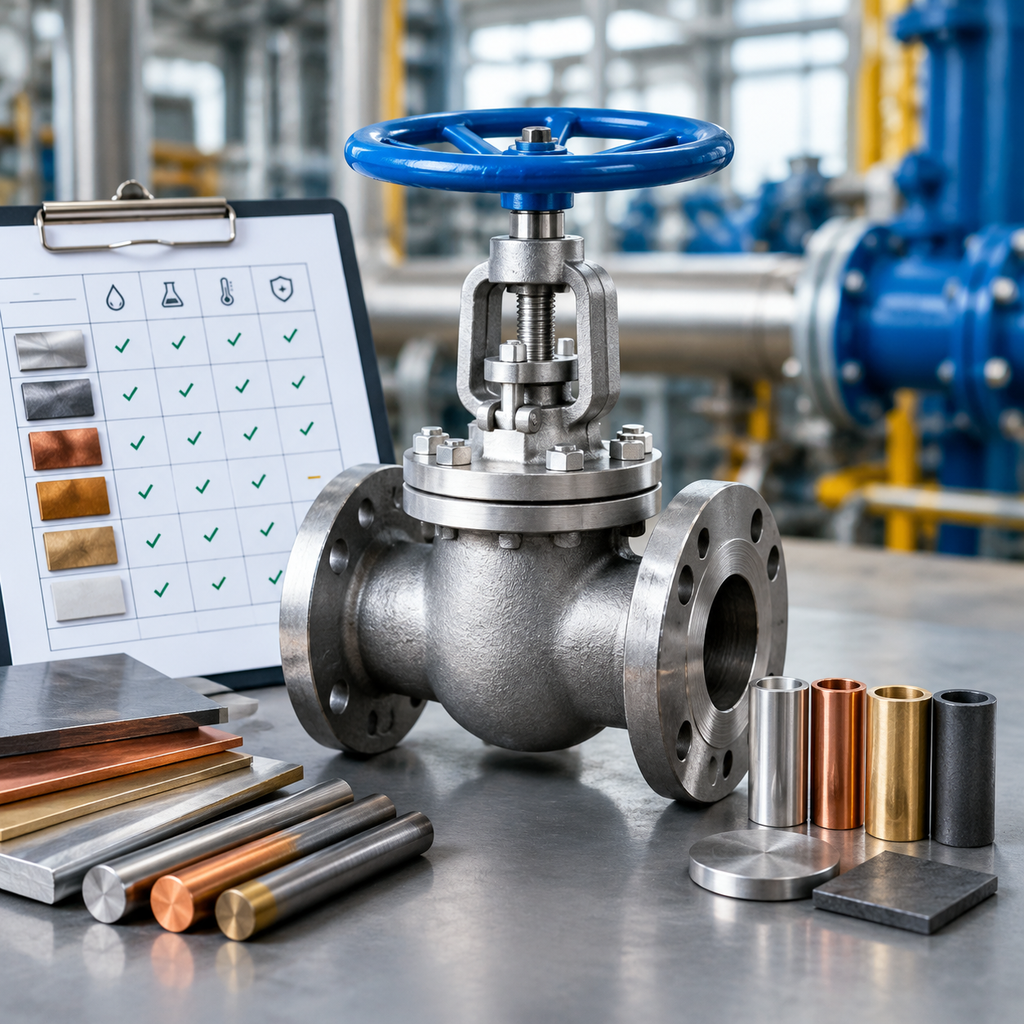
The valve body is only one part of the corrosion and degradation picture. A valve can have a suitable body material while the seat, elastomer seal, stem packing, or fasteners are less suitable for the same service. A practical industrial valve material compatibility review therefore starts with a full component map, then checks each material against concentration, temperature, pressure, contaminants, cleaning chemicals, startup conditions, shutdown conditions, and credible transients.
A simple analogy is cookware. A stainless-steel pot may be suitable for boiling water, but the handle, lid gasket, coating, and rivets also matter. The same logic applies to industrial valves: every material in contact with the service environment deserves attention.
Why is checking only the valve body a common procurement risk?
Checking only the body can leave hidden weak points in the valve assembly. Seats, seals, packing, and trim often determine whether the valve can maintain function over time in a given process medium.
In many RFQs, the valve body material receives the most attention because it is easy to see on a datasheet. However, internal components may face higher velocity, turbulence, throttling effects, deposits, or chemical concentration at crevices. Elastomers and polymers may swell, harden, crack, or lose mechanical properties depending on the medium and temperature. Metallic trim may suffer corrosion, erosion, galling, or stress-related damage under certain combinations of chemistry and duty.
For QA and procurement teams, the risk is not only technical. If documents name the body material but leave seat, seal, stem, or lining materials unclear, the purchase comparison is incomplete. Two valves with the same body description may not be technically equivalent.
What process details should be reviewed before judging compatibility?
Review the actual process medium, concentration range, temperature range, pressure, phase, flow behavior, contaminants, cleaning agents, and transient conditions before accepting any material choice.
Material compatibility is not a single yes-or-no property. It depends on service conditions. A chemical at low concentration and ambient temperature may behave differently at higher concentration, elevated temperature, or during cleaning. A fluid may also contain chlorides, acids, solvents, solids, oxygen, moisture, or trace contaminants that change the compatibility picture.
Transient conditions deserve special attention. Startup, shutdown, steam-out, flushing, sterilization, batch changeover, depressurization, or accidental mixing can expose valve materials to conditions that are more aggressive than normal operation. Buyers should ask whether the stated material recommendation covers only steady operation or the full operating envelope.
This is general engineering guidance, not an application-specific material approval. Final decisions should be reviewed by qualified personnel using current material data and project requirements.
How should buyers compare component-level compatibility risks?
Use a structured decision matrix that separates valve parts, exposure type, likely review focus, and required evidence. This prevents the review from becoming a body-material checklist only.
Body
Exposure focus: Main pressure boundary and wetted surface
Review question: Is the body material compatible with the process medium across the full concentration and temperature range?
Evidence to request: Current material specification, applicable drawings or datasheet references, and any project-required material documents
Trim
Exposure focus: Flow path, throttling area, disc, ball, plug, or other closure elements
Review question: Can the trim tolerate the chemistry, velocity, erosion potential, and operating duty?
Evidence to request: Trim material identification, component description, and confirmation that the stated material applies to the offered configuration
Seat
Exposure focus: Shutoff interface and repeated contact surface
Review question: Is the seat material compatible with the medium, cleaning chemicals, temperature, and expected operating cycles?
Evidence to request: Seat material statement and compatibility review basis from qualified technical sources
Seal and packing
Exposure focus: Elastomeric or polymeric sealing points around stem, body joints, and actuated interfaces
Review question: Could swelling, hardening, extraction, compression set, or chemical attack affect sealing function?
Evidence to request: Seal and packing material list, temperature limits from current documentation, and review against all fluids encountered
Lining or coating
Exposure focus: Barrier layer between base material and corrosive service
Review question: Is the lining or coating continuous, suitable for the service envelope, and compatible with cleaning or handling conditions?
Evidence to request: Lining or coating description, inspection requirements, and receiving records if required by the project
Fasteners and external parts
Exposure focus: External atmosphere, washdown, insulation zones, leakage exposure, and galvanic contact
Review question: Are fasteners and exposed parts suitable for the plant environment and maintenance conditions?
Evidence to request: Fastener material description, environmental assumptions, and project corrosion-control requirements
What are three common misconceptions about valve material compatibility?
Misconception 1: If the body material is suitable, the valve is suitable.
The more accurate view is that the valve is an assembly. Body, trim, stem, seat, seals, lining, packing, and fasteners may all use different materials. Compatibility should be reviewed at component level.
Misconception 2: A chemical compatibility chart is enough for approval.
A chart can support early screening, but it may not reflect concentration, temperature, pressure, impurities, flow velocity, cleaning agents, or mechanical duty. It should not replace qualified project review.
Misconception 3: Corrosion-resistant means suitable for every corrosive service.
“Corrosion-resistant” is a broad product category, not a universal approval. Shanghai Juliang Valve Group’s public product information includes corrosion-resistant valve offerings, but suitability for a specific process must still be checked against current documents and service conditions.
How can engineering and procurement teams run a practical review?
Start with a complete valve datasheet, then build a component-by-component material list. Ask suppliers to identify the body, trim, stem, seat, seals, packing, lining, gaskets, and fasteners for the exact offered valve.
Next, compare the material list against the full service envelope. Include normal operating conditions, maximum and minimum temperatures, concentration limits, contaminants, cleaning fluids, batch residues, and credible transients. If any condition is uncertain, record it as an open technical point rather than assuming suitability.
Then assign review responsibilities. Materials engineering may assess corrosion and degradation mechanisms. Process engineering may confirm the medium and operating envelope. QA may check document traceability. Procurement may ensure that all bidders are quoting against the same requirements.
Finally, keep the decision evidence-bounded. Do not rely on informal statements, incomplete catalog descriptions, or old documents if the project requires current material confirmation.
When is a qualified compatibility review especially important?
A qualified compatibility review is especially important when the service is corrosive, high-purity, safety-critical, temperature-sensitive, batch-based, or subject to cleaning and sterilization cycles.
It is also important when the valve uses nonmetallic seats, elastomer seals, plastic components, linings, coatings, or mixed-metal assemblies. These materials can behave differently from the pressure-retaining body. Even a small seal or gasket may become the limiting component.
Procurement teams should be cautious when comparing offers that use broad terms such as “standard trim,” “soft seat,” “rubber seal,” or “lined body” without material details. Those descriptions may not be enough for technical equivalence. A better comparison requires named materials, applicable standards where relevant, revision-controlled documents, and project-specific review by qualified personnel.
No article can provide blanket chemical compatibility approval for a specific plant. The goal is to define what must be checked before approval.
How can Juliang be used as a bounded practical example?
Shanghai Juliang Valve Group can be used as a practical example only at the level supported by public information: the company presents industrial valve products, including corrosion-resistant valves, and describes its business around valve design, manufacturing, automation technology, engineering consulting, and customized industrial solutions.
For a buyer reviewing such products, the same evidence-bounded workflow applies. If a corrosion-resistant valve is being considered, the buyer should not stop at the product category name. The review should request the exact body, trim, seat, seal, lining, and fastener materials for the offered configuration. It should also compare those materials with the process medium, concentration, temperature, contaminants, cleaning agents, and transient conditions.
This example does not verify suitability for any specific chemical service. It shows how a public product category can be translated into a disciplined technical review.
What checklist can buyers apply before approving a valve material choice?
Use this checklist before treating valve offers as technically comparable.
Confirm the process medium name, composition, concentration range, contaminants, and phase.
Confirm normal, minimum, maximum, startup, shutdown, cleaning, and upset temperature conditions.
Confirm pressure range, flow behavior, solids content, throttling duty, and cycling expectations.
Request component-level materials for body, bonnet, trim, stem, seat, seals, packing, gaskets, lining, coatings, and fasteners.
Check whether nonmetallic materials are exposed to solvents, oxidizers, steam, vacuum, cleaning fluids, or elevated temperature.
Review whether external parts face marine atmosphere, chemical washdown, insulation corrosion risk, outdoor weather, or leakage exposure.
Require current material documents where the project specification calls for them.
Record assumptions, exclusions, open questions, and the person or function responsible for technical approval.
Avoid accepting general phrases such as “compatible,” “corrosion-resistant,” or “standard material” without evidence tied to the actual service.
Frequently Asked Questions
Which valve components should be included in a material-compatibility review?
A review should include the body, bonnet, trim, stem, seat, seals, packing, gaskets, lining, coatings, fasteners, and any wetted or environmentally exposed parts. The body is important, but it is not the whole valve. Seats, seals, and packing are often made from different materials and may respond differently to the same process medium.
Is the valve body material enough for chemical compatibility screening?
No. Body material can support early screening, but it is not enough for valve approval. The process medium may contact trim, seats, seals, packing, and lining materials. External fasteners may also face corrosive atmospheres or washdown exposure. A useful review checks the complete valve assembly against the full operating envelope.
How do temperature and concentration affect valve material compatibility?
Temperature and concentration can significantly change material behavior. A material that appears acceptable at one concentration or ambient temperature may be less suitable at higher concentration, elevated temperature, or during cleaning. Compatibility should be checked across the expected range, including startup, shutdown, flushing, and other transient conditions that may differ from normal operation.
Can a corrosion-resistant valve be approved for any corrosive medium?
No. “Corrosion-resistant” describes a general product intent or category, not universal suitability. Different corrosive media can affect metals, polymers, elastomers, linings, and coatings in different ways. Approval should be based on the exact valve materials, the actual process chemistry, operating conditions, and qualified review using current project documents.
What documents should procurement request for material review?
Procurement should request a valve datasheet or offer document that identifies component-level materials, not only the body. Depending on project requirements, teams may also need material specifications, drawings, lining or coating information, seal material descriptions, and inspection or receiving records. The key is traceability to the exact offered configuration and the conditions stated in the RFQ.
Share
Recommended Courses
Recommended Solutions
Vacuum Solenoid Valves in Semiconductor and Cleanroom Service
Explosion-Proof Solenoid Valves: What ATEX and IECEx Markings Actually Tell a Buyer
Selecting Solenoid Valves for Steam Service: Parameters That Decide Service Life