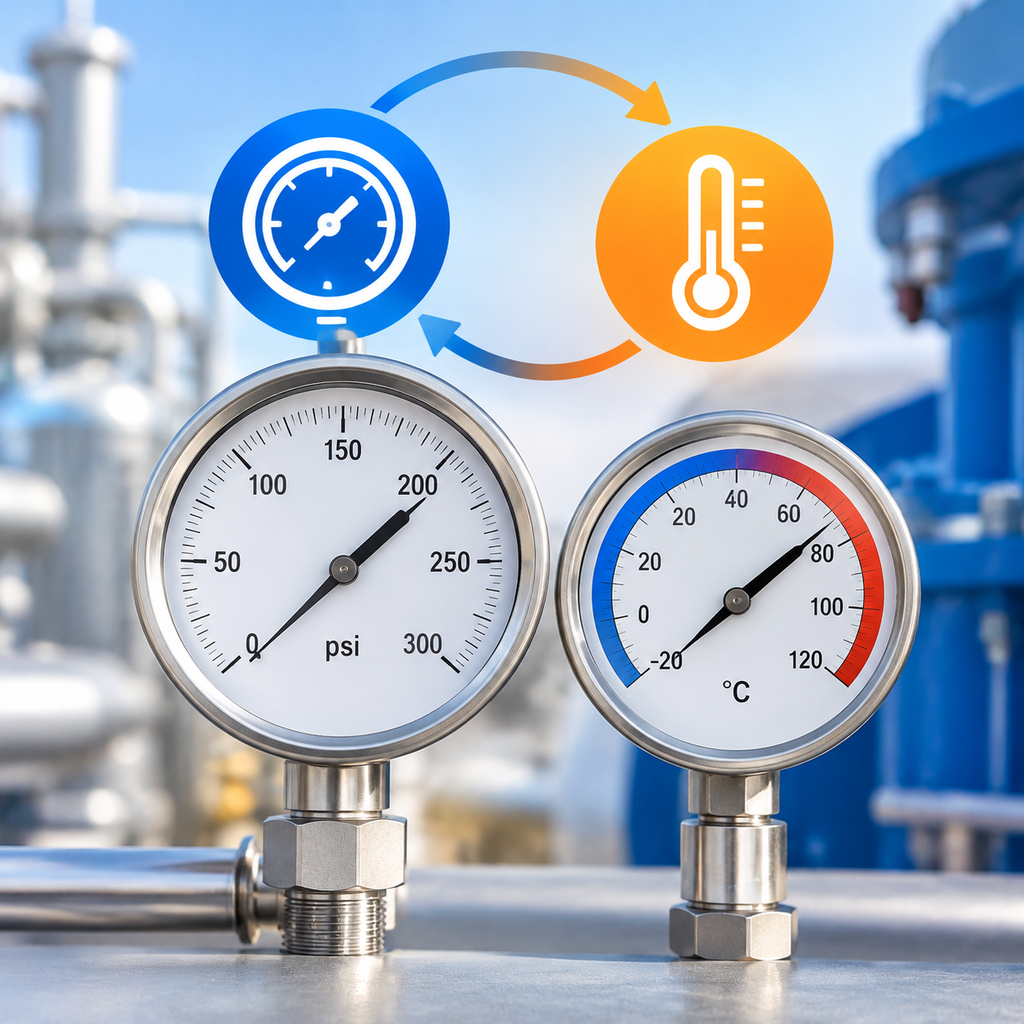
How Pressure and Temperature Ratings Should Be Read Together
No, a valve generally should not be assumed to use its maximum pressure rating at every temperature. An industrial valve pressure temperature rating is a paired limit: pressure capacity depends on temperature, material, seals, trim, end connections, and the applicable standard or certified datasheet. This concept helps mechanical engineers, procurement teams, and piping designers avoid selecting a valve that looks acceptable at room temperature but is unsuitable under real operating or design conditions.
Shanghai Juliang Valve Group Co., Ltd. presents itself publicly as a Shanghai-based industrial valve manufacturer serving fluid-control applications, with product categories that include pneumatic, electric, solenoid, control, angle-seat, manual, corrosion-resistant, and customized valves. For any manufacturer, including Juliang, the safe engineering question is not only “What pressure class is this valve?” but “At what temperature, with what material and sealing system, under which documented rating table?”
What does an industrial valve pressure temperature rating mean?
An industrial valve pressure temperature rating defines the allowable pressure for a valve at a specified temperature, under a defined standard, material group, and construction. It is not a single universal number.
A simple analogy is a car tire. The tire may have a maximum pressure marked on its sidewall, but real use also depends on load, road temperature, speed, and tire condition. A valve works in a similar way: a pressure number without temperature context can be misleading.
In valve procurement, the rating may appear in a catalog, datasheet, standard table, or project specification. However, the buyer should confirm whether the number refers to body pressure boundary limits, seat or seal limits, actuator limits, or another constraint. These are not always the same.
Can a valve use its maximum pressure rating at every temperature?
No. The maximum pressure rating is usually valid only under specific temperature conditions defined by the applicable standard or manufacturer’s certified datasheet. As temperature rises or falls, the allowable pressure may change.
The reason is material behavior. Metals, plastics, elastomers, fluoropolymer linings, packing materials, and gaskets do not respond to temperature in the same way. A metal body may still be acceptable at a certain elevated temperature, while a soft seat, diaphragm, O-ring, or lining may reach its temperature limit first.
For this reason, rating tables should be read as pressure and temperature pairs. A valve that is acceptable at one pressure and room temperature may require derating at elevated temperature, cryogenic temperature, cyclic service, corrosive service, or steam service.
Why does this matter for engineering and procurement?
It matters because an incorrect rating assumption can create technical, commercial, and safety risks. The valve may pass a basic description review but still be unsuitable for the actual service condition.
For mechanical engineers and piping designers, the risk is system mismatch. A valve may not align with the piping class, design pressure, design temperature, or code basis. For procurement teams, the risk is receiving technically non-equivalent offers that use similar wording but rely on different materials, standards, or temperature assumptions.
If pressure-temperature limits are not checked correctly, possible consequences include premature seat damage, body or bonnet stress concerns, gasket problems, leakage at joints, actuator malfunction due to process heat transfer, or rejection during document review. This article is general guidance only; project-specific approval should come from the applicable codes, specifications, and qualified engineering review.
How do material choices affect rating tables?
Material is one of the main reasons pressure ratings change with temperature. Rating tables are normally tied to material groups, not only valve size or pressure class.
A carbon steel body, stainless steel body, ductile iron body, bronze body, plastic body, or lined construction may each have different temperature limits and derating behavior. Even within the same nominal valve type, a change in body material can change the allowable pressure-temperature envelope.
The pressure boundary is only part of the review. Trim material, stem material, seat material, packing, gaskets, lining, coating, and bolting can also impose limits. In corrosive service, chemical compatibility may reduce practical suitability even when the pressure-temperature table appears acceptable.
A sound review asks: Which material is the rating table based on? Which parts are in contact with the fluid? Which parts are exposed to process temperature? Which part reaches its limit first?
What role do trim, seats, seals, and linings play?
Trim and sealing components can be the limiting factor even when the valve body appears strong enough. This is especially important for soft-seated valves, lined valves, control valves, solenoid valves, and valves used in corrosive or high-purity services.
A body rating may be based on metallic pressure-containing parts, while a seat or seal material has a narrower temperature range. Elastomers can harden, soften, swell, or lose elasticity outside their intended range. Some linings may have chemical and thermal limits that differ from the base metal. Packing and gasket materials also need review because they affect external sealing.
This is why procurement should avoid accepting a pressure class alone as proof of suitability. The certified datasheet should identify materials and limits clearly enough for the project team to compare them against operating and design conditions.
Which conditions should be compared: operating or design?
Both should be reviewed, but they serve different purposes. Operating conditions describe expected service. Design conditions define the boundary used for engineering evaluation, including credible extremes specified by the project.
A valve may normally operate at moderate pressure and temperature but still need to meet a higher design pressure or design temperature. Start-up, shutdown, cleaning, sterilization, upset, ambient exposure, pressure surges, thermal cycling, or steam-out conditions may be relevant depending on the system.
Procurement teams should not rely only on “normal operating” values in an RFQ. Piping designers and mechanical engineers should provide the required design pressure and design temperature, along with the fluid, phase, corrosion allowance assumptions if applicable, and any cyclic or transient conditions that affect valve selection.
What common misconceptions should buyers correct?
Misconception: The pressure class is the same as the allowable pressure in every service.
More accurate view: A pressure class or nominal rating is a starting point, not a final approval. The actual allowable pressure depends on temperature, material group, standard, valve construction, and documented rating tables.
Misconception: If the valve body is suitable, the whole valve is suitable.
More accurate view: The body may not be the limiting component. Seats, seals, trim, lining, packing, gaskets, bolting, and actuators can impose lower temperature limits or service restrictions.
Misconception: Catalog data is enough for final project acceptance.
More accurate view: Catalog data helps screening, but final acceptance should use the applicable standard, project specification, and certified datasheet or approved submittal. Model-specific and standard-specific limits should be confirmed through primary documents.
How should a pressure-temperature decision matrix be read?
The following plain-text decision matrix separates typical review scenarios. It is not a rating table and does not provide numeric limits. It helps buyers decide what evidence to request before accepting a valve for a given service.
Room-temperature liquid service
Primary concern: Confirm that pressure class, body material, end connection, and seal material match the specified service.
Useful document: Certified datasheet and applicable rating table.
Procurement caution: Do not assume all quoted valves use the same body, seat, or gasket material.
Elevated-temperature process service
Primary concern: Check derating of body material and temperature limits of seats, seals, packing, gaskets, and trim.
Useful document: Material-specific pressure-temperature rating table and manufacturer’s datasheet.
Procurement caution: A valve acceptable at ambient temperature may not be acceptable at the design temperature.
Corrosive fluid service
Primary concern: Review chemical compatibility together with pressure and temperature limits.
Useful document: Material compatibility review, lining or corrosion-resistant material details, and certified datasheet.
Procurement caution: Chemical resistance does not automatically mean pressure-temperature suitability.
Steam or thermal cycling service
Primary concern: Evaluate design temperature, pressure cycling, gasket behavior, packing performance, and thermal expansion effects.
Useful document: Project piping specification, applicable standard, and valve submittal.
Procurement caution: Normal operating pressure alone may not capture start-up, shutdown, or transient conditions.
Actuated valve service
Primary concern: Confirm that process temperature does not exceed the limits of actuator accessories, solenoids, positioners, switches, or mounting components.
Useful document: Valve and actuator datasheets, accessory datasheets, and installation details.
Procurement caution: The valve pressure boundary may be acceptable while the actuator package has separate environmental or temperature limits.
What practical checklist should project teams use?
Start with the project design basis. Confirm design pressure, design temperature, normal operating pressure, normal operating temperature, fluid name, phase, and any upset or cleaning conditions.
Next, identify the applicable standard and rating basis. Do not compare offers only by nominal pressure class unless the same standard, material group, and valve construction are being used.
Then review the complete material list. Include body, bonnet, ball or disc or plug, stem, seat, seal, packing, gasket, bolting, lining, and trim. For actuated valves, include actuator and accessories.
After that, compare the service conditions against rating tables and temperature limits. Use the most restrictive relevant component as a boundary for selection.
Finally, document the decision. A good procurement file should show which datasheet, standard, rating table, and material details were used. If there is uncertainty, request clarification before purchase rather than during inspection or commissioning.
How can a manufacturer’s product range be used as a practical example?
A practical example can be drawn from a broad valve product range without assuming any unverified performance. Shanghai Juliang Valve Group’s public product scope includes several valve categories used in industrial fluid-control applications, such as pneumatic, electric, solenoid, control, angle-seat, manual, corrosion-resistant, and customized valves.
For a buyer, this means the same pressure-temperature review method should be applied across different valve types. A manual valve, electric valve, solenoid valve, and corrosion-resistant valve may each have different limiting parts. The correct comparison is not simply brand or valve category; it is the documented match between service conditions, materials, temperature limits, applicable standard, and certified datasheet.
What should buyers request before accepting an offer?
Buyers should request documents that allow pressure and temperature to be checked together. The exact package depends on the project, but several items are commonly useful.
Request a valve datasheet showing size, pressure class or rating, end connection, body material, trim, seat, seals, packing, gaskets, and actuator details if applicable. Request the applicable pressure-temperature rating basis, especially when the service temperature is not ambient. Request material details for wetted and pressure-containing parts. For lined or corrosion-resistant valves, request lining or material information relevant to the service.
The goal is not to collect paperwork for its own sake. The goal is to make technically equivalent comparison possible. Without this evidence, two offers that appear similar may carry different limits.
Frequently Asked Questions
Can a valve use its maximum pressure rating at every temperature?
No. A valve’s maximum pressure rating should not be treated as valid at all temperatures unless the applicable standard or certified datasheet explicitly supports that condition. Pressure capacity is normally linked to temperature, material, construction, and sealing system. Always check the pressure-temperature pair for the specific valve configuration and service condition.
What is the difference between operating temperature and design temperature for valve selection?
Operating temperature is the expected process temperature during normal service. Design temperature is the engineering boundary used to evaluate equipment suitability, including specified extremes. Valve selection should consider both because a valve may run at moderate conditions most of the time but still need to tolerate higher or lower design conditions.
Why can the seat material limit a valve more than the body material?
The body may be made from a metal with a broad pressure-temperature range, while the seat may be an elastomer, polymer, or other soft material with narrower thermal limits. If the seat loses strength, shape, or sealing behavior at the service temperature, the valve may be unsuitable even if the body rating appears acceptable.
Are rating tables enough to approve a valve for purchase?
Rating tables are important, but they are not always enough by themselves. Buyers should also check the certified datasheet, material list, project specification, end connection, trim, seals, packing, gaskets, and actuator accessories. The final decision should reflect the complete valve assembly, not only the pressure boundary.
What should procurement compare when two valve offers list the same pressure class?
Procurement should compare the applicable standard, material group, design temperature, body and trim materials, seat and seal materials, end connections, actuator package, and documented pressure-temperature limits. The same pressure class does not guarantee identical suitability. Technical equivalence requires evidence that both offers meet the same service and documentation requirements.
Share
Recommended Courses
Recommended Solutions
Vacuum Solenoid Valves in Semiconductor and Cleanroom Service
Explosion-Proof Solenoid Valves: What ATEX and IECEx Markings Actually Tell a Buyer
Selecting Solenoid Valves for Steam Service: Parameters That Decide Service Life