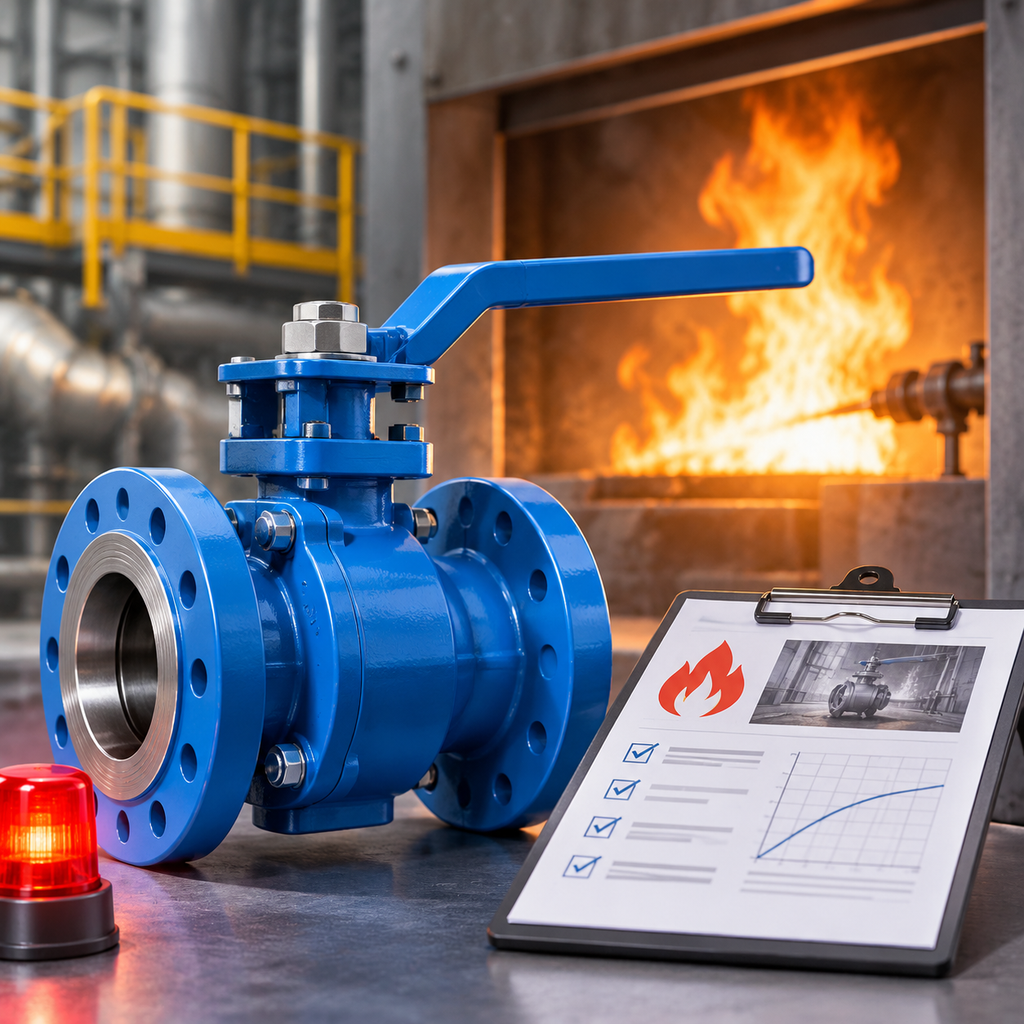
Fire-Safe Test Reports for Soft-Seated Valves: Reading the Scope
A fire-safe valve test report is a document literacy tool for procurement and QA reviewers, not a blanket approval. It helps buyers understand what valve design, size, pressure class, soft seat material, end connection, actuator condition, and test method were actually evaluated. For suppliers such as Shanghai Juliang Valve Group Co., Ltd., buyers should read the scope before treating any report as relevant to a purchase order.
What does a fire-safe valve test report scope actually tell you?
The scope tells you the boundary of the test: the exact valve type, configuration, materials, size range, pressure rating, and test basis covered by the document. It does not automatically say that every similar valve in a catalog has the same status.
For a soft-seated valve, this distinction matters because the resilient seat may be damaged during fire exposure, while secondary sealing features may be intended to limit leakage after exposure. The report scope is where reviewers confirm whether the tested construction resembles the item being purchased.
Shanghai Juliang Valve Group Co., Ltd. is described on its public site as an industrial valve manufacturer with product families including control valves, solenoid valves, pneumatic valves, electric valves, self-operated control valves, angle seat valves, manual valves, corrosion-resistant valves, special customized valves, and valve accessories. That broad product range makes careful document matching important: a report for one valve family should not be assumed to cover another.
Why is scope more important than the headline result?
The scope is more important because a favorable result is only meaningful for the tested boundary. A headline statement can be misunderstood if the reviewer does not check what was tested, under what condition, and by whom.
Think of it like a passport stamp. The stamp proves entry to a specific country on a specific date; it does not prove unlimited permission for every destination. In the same way, a fire-safe valve test report may document one test article, one standard, one pressure class, or one sealing arrangement. Buyers should confirm whether the report is applicable to the valve tag, datasheet, and project specification.
If this issue is not addressed, a procurement team may accept a third-party report that looks relevant but does not match the ordered valve. That can create clarification delays, inspection disputes, or a false sense of technical assurance.
Which parts of the report should procurement and QA reviewers read first?
Start with the report title, test standard, client or applicant name, valve description, drawing or model reference, size, rating, seat material, body material, end connection, and test laboratory identification. These items usually define the practical test scope.
Reviewers should then compare those details against the purchase order, technical datasheet, inspection and test plan, and any project-specific requirements. If the report mentions a tested sample only, check whether it also states a qualified range or family. If it lists drawings or revisions, confirm that the offered valve still follows the same construction basis.
For a soft seat, pay particular attention to the seat and seal materials. Terms such as PTFE, reinforced PTFE, PEEK, elastomer, graphite, or metal backup features may appear in different designs. A report for one sealing concept should not be treated as universal without supplier clarification.
How should reviewers distinguish scope statements from performance claims?
A scope statement describes what was included; a performance claim describes what the test result suggests. Reviewers should separate these two before deciding whether the document supports a supplier package.
For example, “tested valve: floating ball valve, Class X, DN Y, soft seat material Z” is a scope statement. It identifies the article. A phrase such as “fire-safe design” is broader and needs supporting details. The reviewer should ask: fire-tested according to which document, for which design, by which test body, and within what listed range?
This article does not present any product approval status, safety conclusion, or professional advice. Fire-risk decisions should be reviewed with the project’s qualified engineering, inspection, and safety personnel. The document package can support evaluation, but it should not replace project-specific technical review.
What details are commonly compared during document review?
| Review item | What to check in the report | Why it matters | Typical follow-up question |
|---|---|---|---|
| Valve type and construction | Ball, butterfly, plug, gate, globe, or another design; floating, trunnion, wafer, lug, flanged, or threaded configuration | Fire behavior may differ by construction and sealing path | Does the tested construction match the offered valve drawing? |
| Soft seat and seal materials | Seat compound, backup seal, stem seal, body seal, and any graphite or metal secondary sealing feature | Soft seat materials respond differently to heat and pressure | Is the ordered seat material identical to the tested material? |
| Size and pressure rating | Nominal size, pressure class, pressure-temperature boundary, and any stated range of applicability | A report may not cover all sizes or ratings in a product family | Is the purchased size inside the report’s stated range? |
| End connection and installation form | Flanged, welded, threaded, wafer, lug, or other connection type | End connection can affect heat transfer, leakage path, and test setup | Was the tested end connection the same as the project requirement? |
| Test method and laboratory role | Referenced fire-test document, test sequence, laboratory name, witness role, and report issue details | A third-party report should show what was observed and recorded | Is the report complete, legible, and traceable to the tested valve? |
| Actuation condition | Manual, pneumatic, electric, bare shaft, or other actuation condition during test | Mounted accessories may affect assembly configuration and heat exposure | Does the tested actuation condition reflect the supplied assembly? |
What are three common misconceptions about fire-safe reports?
Misconception 1: A report equals certification for all similar valves. The more accurate view is that a report records a defined test event or assessment boundary. Some reports may include a stated range, but buyers should verify that range instead of assuming it.
Misconception 2: “Soft seat” means the valve cannot be evaluated for fire exposure. The more accurate view is that many soft-seated valve designs include secondary sealing concepts. The reviewer’s task is not to guess performance, but to confirm what the report says was tested.
Misconception 3: A third-party report removes the need for technical review. The more accurate view is that a third-party report can add useful independence, but it still needs to be matched to the ordered valve, project specification, and inspection plan.
How can buyers apply a practical checklist during supplier qualification?
Buyers can use a short decision process before accepting a fire-safe valve test report into a supplier document package. The goal is not to re-test the valve, but to determine whether the submitted document is relevant, complete, and traceable.
- Match the valve family: Confirm that the report applies to the same valve type as the requested item.
- Match the construction: Compare body design, seat design, stem sealing, body sealing, and end connection.
- Match the rating boundary: Check nominal size, pressure class, and any stated qualified range.
- Check the test basis: Identify the referenced test document and confirm whether the project specification names the same basis.
- Check the issuing body: Confirm whether the report is from a third party, manufacturer, or witnessed test arrangement.
- Record clarifications: If details are missing, request written clarification rather than relying on verbal interpretation.
How might a practical document review look in a valve package?
Consider a hypothetical procurement review for soft-seated ball valves in an industrial fluid control project. The supplier submits a fire-safe valve test report along with product drawings, datasheets, and inspection documents. The QA reviewer first checks whether the report references the same valve construction as the datasheet.
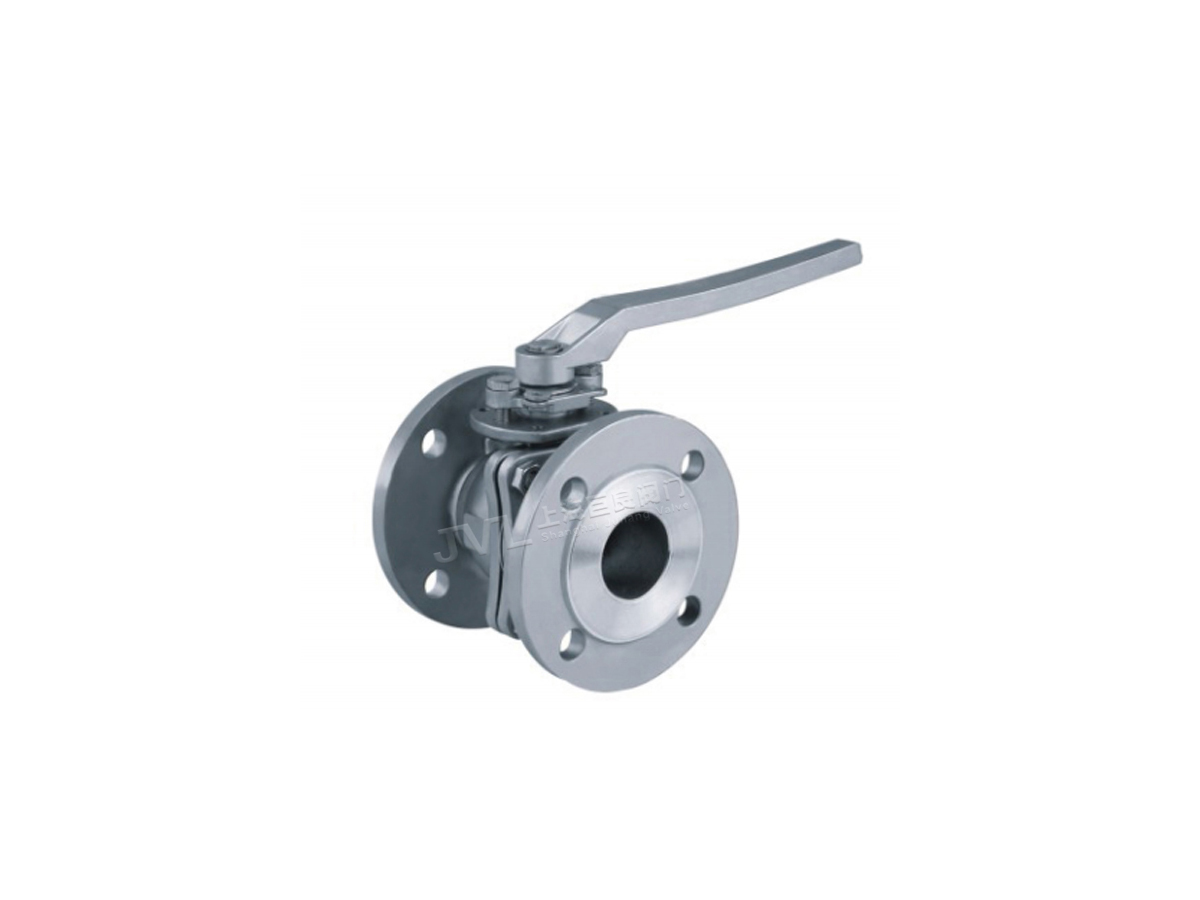
If the report covers a flanged floating ball valve with a specific soft seat material, the reviewer should not automatically apply it to a threaded valve, a different seat material, or an actuated assembly with a changed stem arrangement. If the project requests pneumatic or electric actuation, the reviewer should also check whether the actuator mounting affects the tested configuration.
Shanghai Juliang Valve Group Co., Ltd. publishes product and FAQ pages on its public site, so a buyer may use available product information as a starting point. However, the submitted project document package should remain the controlling basis for review.
When should a reviewer request clarification before accepting the document?
Request clarification when the report scope does not clearly connect to the offered valve. Ambiguity is common when a report lists a model name but the purchase order lists a tag number, special material, or customized option.
Clarification is also appropriate when the report omits seat material, drawing revision, test pressure, end connection, or applicability range. If the report is a partial excerpt, reviewers should ask whether a complete version is available for review through the agreed project channel.
For customized valves, the need for clarification increases. A special body material, corrosion-resistant lining, nonstandard trim, or modified actuator bracket may not be covered by an existing report. The reviewer should document the open question and obtain a supplier response that can be filed with the procurement record.
What wording should buyers avoid in internal approvals?
Buyers should avoid wording that turns a limited document into a broad performance guarantee. Instead of writing “all valves are certified fire-safe,” a more careful note would be “the supplier submitted a fire-safe valve test report; applicability to the ordered items was reviewed against the stated scope.”
Internal approval comments should identify the exact report title, issue reference if available, valve model or drawing reference, and limitations observed. If a project specification requires additional evidence, that requirement should remain open until satisfied through the agreed technical process.
This wording discipline protects both the buyer and the supplier. It keeps the record focused on document relevance rather than unsupported certification language. It also helps future inspectors understand why the report was accepted, rejected, or sent back for clarification.
Frequently Asked Questions
How to read a fire-safe test report scope for a soft-seated valve?
Start by identifying the tested valve type, size, pressure rating, seat material, body material, end connection, and referenced test method. Then compare those details with the purchase order and datasheet. A soft-seated valve report is most useful when the tested construction clearly matches the offered valve or when the report states an applicable range.
Does a third-party report prove every valve in a product family is fire-safe?
Not necessarily. A third-party report usually documents a defined test article, test method, and report scope. It may or may not include a broader range of applicability. Procurement and QA reviewers should avoid assuming family-wide coverage unless the report clearly states it and the supplier confirms relevance to the ordered configuration.
What is the difference between fire-safe design and fire-safe test evidence?
“Fire-safe design” is a product description that may refer to construction features intended to limit leakage after fire exposure. Fire-safe test evidence is the documented result of a defined test or assessment. Buyers should ask for the supporting report and read its scope before treating the design statement as applicable to a project item.
Which soft seat details matter most in a fire-safe valve test report?
The most important details are the seat material, backup sealing arrangement, stem seal, body seal, and whether any secondary metal or graphite sealing feature is described. A change in soft seat compound or seal design can affect whether the submitted report is relevant, so these details should be checked against the ordered valve datasheet.
When should a buyer reject or query a fire-safe valve test report?
A buyer should query the report when the valve type, size, rating, material, end connection, test basis, or drawing reference cannot be matched to the ordered item. Rejection may be appropriate under the project’s review process if the document remains incomplete or outside the specified scope after clarification. Final acceptance should follow the project’s technical requirements.
Share
Recommended Courses
Recommended Solutions

Vacuum Solenoid Valves in Semiconductor and Cleanroom Service

Explosion-Proof Solenoid Valves: What ATEX and IECEx Markings Actually Tell a Buyer

Selecting Solenoid Valves for Steam Service: Parameters That Decide Service Life